
Workshop discussion summary
Theme: Connection and Our Relationship with Technology | Location: Eindhoven, The Netherlands
Home > Editorial > Writing > The Role of Art
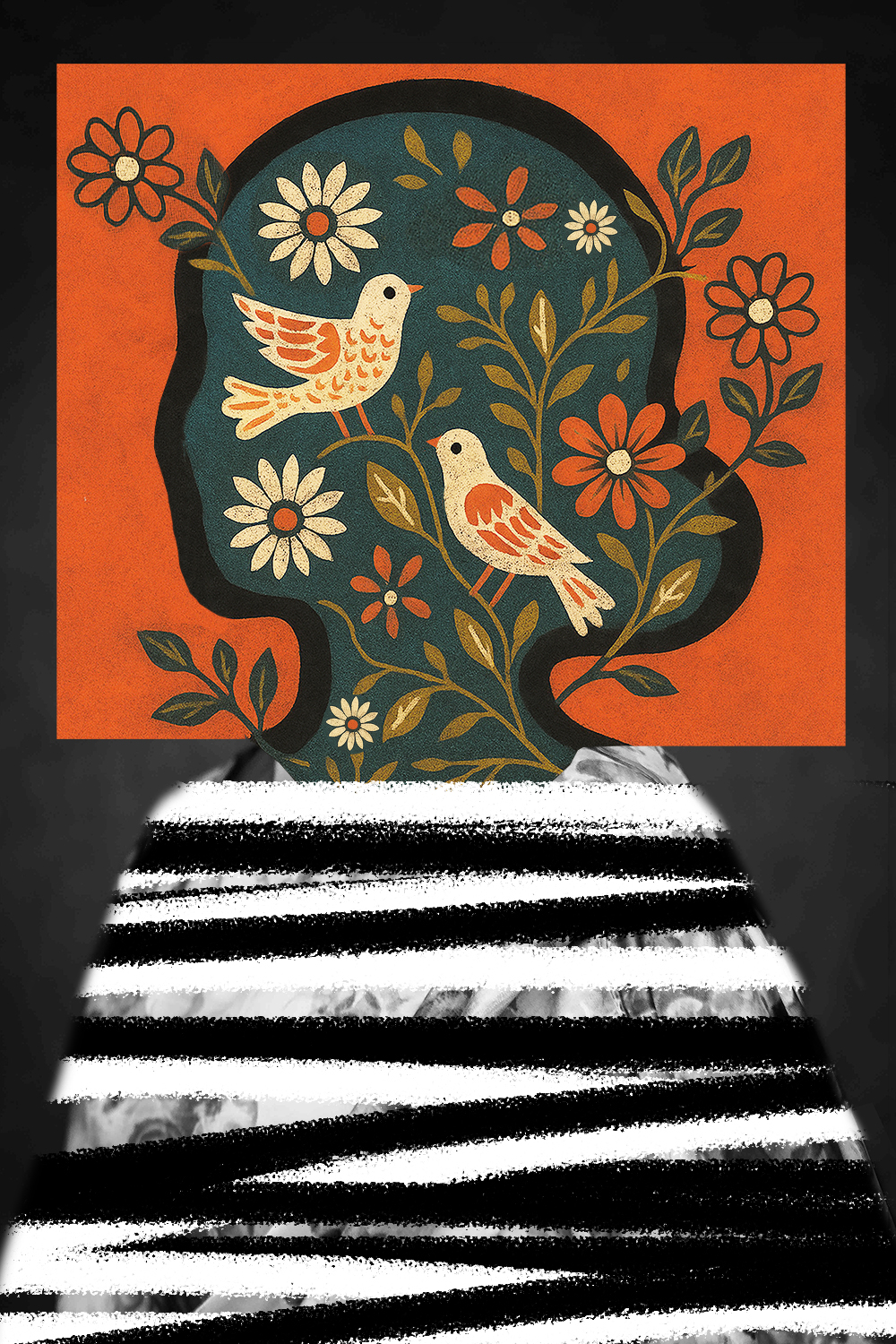
Artists can make difficult perspectives tangible for others to experience. They can give words or shapes or colors to things we otherwise may overlook. Just as art pushes us to criticize the status quo and imagine wild ideas, technology enables us to bring wild ideas to life. Perhaps through more purposeful and curious engagement between disciplines, technology could be leveraged to create truly meaningful experiences for people and lasting positive impact for the planet.
The processes of an artist and an engineer could be described similarly: curiosities lead to investigations. But the trajectories of the two disciplines are usually very different. The close connection between technology and business can make it difficult for the engineer to innovate for the simple good of humankind. Curiosity may spark the flame in the research phase, but questions of economic viability and profit are often already introduced in the university, which can influence the direction research takes, sometimes searching for problems to justify the innovation.
In business, where financial gain is the measure of success, problems can sometimes be amplified to drive needs. Entrepreneurs may race to “out-tech” each other, profits can override purpose, and innovative ideas can easily lose their integrity. Technologies offer us great potential, but with the power they bring, how they’re integrated into our lives warrants serious critical debate. Rather than inventing problems, we should first ask the question: what do we really need to solve?
Indeed, both the technologist in the lab and the artist in the atelier start with a question and build understanding through a process of discovery. While the engineer seeks to find answers through testing and feedback, the artist explores and asks questions without requiring solutions. Free from requirements like scalability, art is more easily able to keep its integrity intact. In fact, integrity is what gives art its value.
Design may be considered as a hybrid role that borrows approaches from the art world. Designers study problems and bring awareness to them through tools, products, or systems that change how we function or interact. A co-design approach even seeks to empower people to find solutions themselves with minimal intervention from the designer.
In the 1990s, the global design firm, IDEO, popularized “design thinking” as a profitable model for finding solutions. It uses an iterative cycle of ideation and testing to get from point A to point B. Over the years, their approach was packaged as an optimization methodology and was commonly used in many businesses. While cutting-edge at one time, IDEO’s consultancy services have stagnated. Perhaps the task today is not to disseminate design thinking, but to question what we consider problems and change how we think about creating solutions. Can we shelve efficiency and profits to create with pure integrity?
Perhaps it’s time to turn to art thinking. Art thinking begins with assessing the status quo. Unbound to solutions, the results often end with a question, provoking us to reflect, question our own beliefs, and discuss new ideas with each other. At its finest, art goes even deeper, evoking deep and hard-to-describe emotions without manipulation and requiring nothing in return. Emotions, especially unconscious ones, are a powerful part of every decision we make. The way those emotions are tapped, and by whom, matters.
If artists only ask questions, then who has the answers? Is it the scientists who research and explain the world around us? Is it the designers who translate observations into systems and tools? Is it the technologists who enable efficiency and optimization? Art asks us to stop for a moment, to look insides ourselves and consider what we think and feel—and perhaps that’s where the true answers are.
Concept contributors: Mila Chorbadzhieva, Maron Galama, Jessica Smarsch, Koen Snoeckx, and Raymond van Ee
Writing & Illustration: Jessica Smarsch

