
Home > Editorial > Writing > Disconnecting to Connect Again
A digital solution for everything
For centuries, humans have strived to make life easier and more convenient. Look around the world today and it seems we’ve arrived: online business meetings, on-demand streaming, and next-day delivery from web stores make it easier and faster to get what we want. Why walk, ride a bike, or hop in a car when all we need to do is tap a screen? Life has become so efficient, it’s almost unnecessary to venture outdoors.
While efficiency can feel convenient, it also runs the risk of creating extreme independence and isolation, hindering social skills and exacerbating feelings of loneliness. Human interaction may seem unnecessary for many common tasks (think self-checkouts lanes in the grocery store) yet we still need deep connections with the people around us, a larger community, and society. As the Harvard Study of Adult Development has concluded, positive, supportive relationships are connected to longevity.
What happens when human connection is treated as just another inefficiency to resolve? Today’s youngest generation, born into a world of convenient transactions, seems to be saying: “No, thanks”.
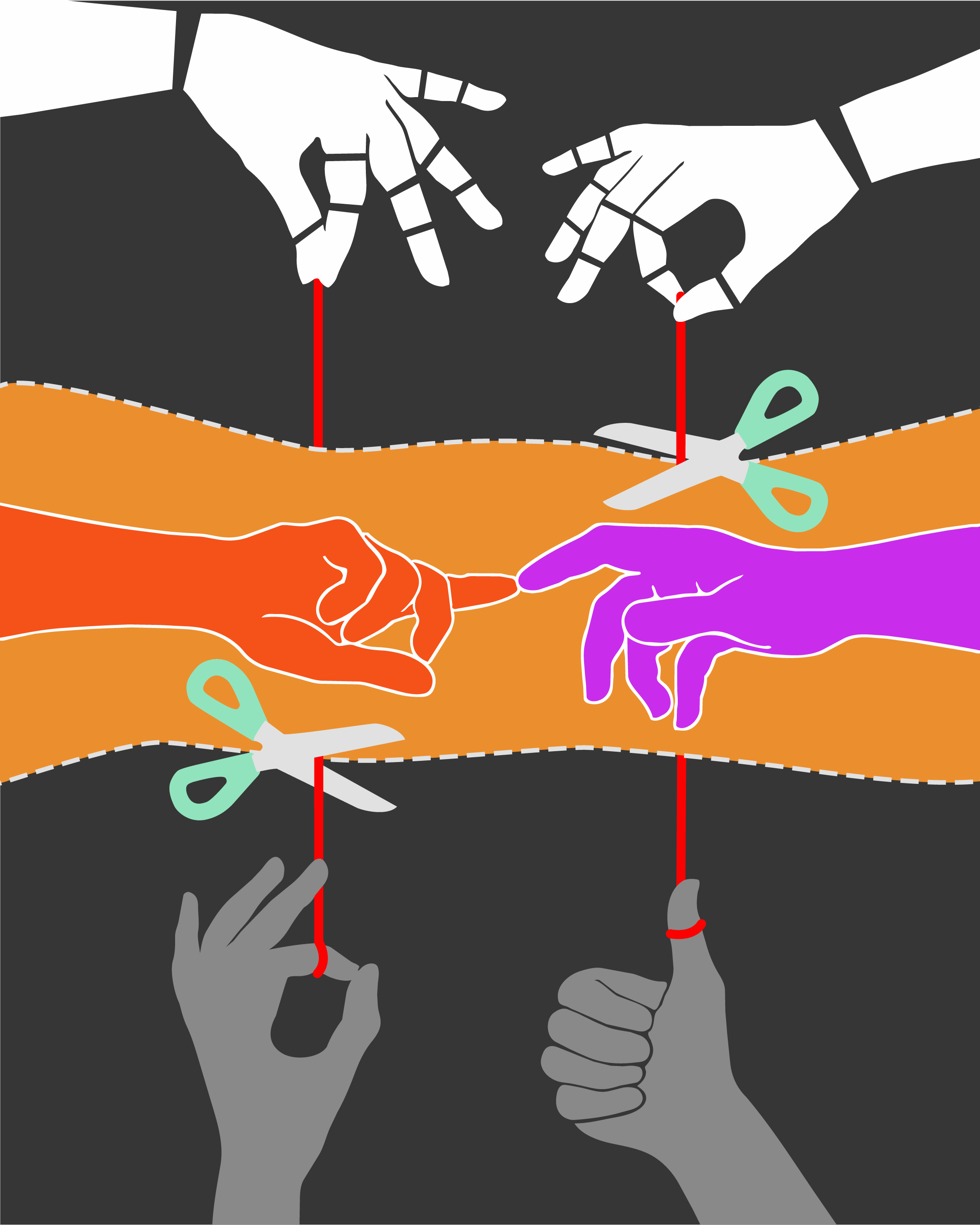
It begins with good intentions
Digital platforms can offer great potential for connecting with others. Requiring little effort, they offer “community” and a way to stay in touch with the people in our lives.
This power to bring people together has been described by philosopher Marshall McLuhan as the “global village”. In his book Understanding Media: the Extensions of Man (1964), McLuhan introduced the term to describe being in contact with people and events all over the world. McLuhan wrote that the visibility and connection made possible by “electric media” would create an immense human awareness and with that, a feeling of responsibility as never felt before.
While initially positive about the possibilities of e-media, he later acknowledged the corresponding negative consequences. He described an information overload that would eventually create a numbing effect, making it harder to distinguish and focus on the things that really matter. As a result, he predicted this would lead to people turning inward, and that the utopic image of “one global village” would turn out to be an array of isolated islands.
Today, in addition to friends, family, and like-minded strangers, bots are increasingly active on every well-known platform. In 2016, the “Dead Internet Theory” was first introduced and thought of as a conspiracy theory. It relates to the idea that bots influenced by algorithms were the predominant user of the internet, instead of humans. And today, with 51% of all internet traffic generated by bots in 2024, a digital global village seems to be even more out of reach.
How technology has affected connection
The internet introduced the idea that people could connect with strangers from anywhere around the world through platforms like online chat rooms. As the internet began widening virtual social networks, romantic connections were an obvious next step.
Match.com came on the scene in 1995, digitizing the search for love. And while data regarding the percentage of couples who met online varies in different areas of the world, online dating (dating apps) has become the norm, displacing other ways of meeting in real-world settings. That does not mean that it offers a better or more effective way to connect, rather that we have accepted the promise that there’s a better (more convenient) way to do it—and we’ve adopted the practice.
Despite that statistic, the tides may be changing. A Forbes Health Survey shows that 78% of all users report dating app burnout with top reasons being cited as “failure to connect, disappointment, and rejection”. The failure of these platforms has led to three distinct (potentially overlapping) directions in younger people’s relational activities.
One of these directions is deliberate celibacy and focus on the self. With terms-of-the-moment like “solo-maxxing”, those choosing this direction are rejecting dating altogether, choosing instead to reclaim mental clarity, set boundaries, and rebuild feelings of self-worth. Retreating from painful relationship experiences to gain a healthier sense of self is nothing new and can certainly be beneficial if the person uses the time to grow, reflect, and ultimately try again.
Another direction is towards AI companions. This phenomenon, sometimes called “social offloading”, lets people pour their anxieties, questions, and vulnerabilities into an algorithmic system and get a response with simulated human quality. An AI companion with the apparent ability to understand and validate every thought and emotion may sound soothing, but it sidesteps difficult yet inherent parts of a human relationship. Human relationships have never been easy and certainly not simple, streamlined, nor efficient. Relationships involve two or more autonomous individuals. Messiness is inevitable, and it helps us empathize with ourselves, others, and the world around us. Connection with AI can satiate certain emotional needs while potentially stunting our ability to empathize, understand others, and adjust our own ideas to live more harmoniously in community.
As written in the essay Wat als liefde programmeerbaar wordt? (What if love becomes programable?), published by online webzine Bij Nader Inzien, “If technology makes love comfortable and controllable, that manufacturability threatens to become a norm. Programmable love then becomes not only an alternative, but a measure that real relationships must reflect.”
The article suggests that letting go of control and embracing risk, unpredictability, and potential heartache is necessary, and not just one more inefficiency to resolve.
CNET’s survey of over 1000 singles suggests that the likelihood of AI companions replacing real human relationships is relatively low. Of those surveyed, 47% had a negative opinion of AI in romantic contexts. Of the 12% of singles who had engaged with an AI companion, only 38% reported using it to build a genuine connection. Still, that translates to a significant number of people seeking comfort through non-human connection.
On the other end of the spectrum, there’s a third direction that the disenchanted are taking. With nostalgia for an era that they never experienced themselves, many young people today are opting out of tech completely and demanding IRL (in real life) connection.
“Connection doesn’t need innovation”
Taking inspiration from the past, many young people are finding gaps in the digital-first system, seeking out real world initiatives, and rewriting the script. They are rejecting swiping and scrolling and instead opting for a life focused on authentic connections, finding friends (and potential romantic partners) through real life experiences and personal agency.
Data illustrates this change in behavior and preference. A 2024 study by Accenture of over 24,000 participants shows that 37.9% of respondents appreciate the so-called “joy of missing out” on technology-related activities. According to Wunderman Thompson’s Gen Z report, 92% of participants think seeing friends in-person is better than meeting them online. And last year, the Global Wellness Summit named “analog wellness” as its top trend, describing the move away from technology towards offline hobbies and real-life experiences.
An organization that supports this shift is The Offline Club. Based in various cities around the world, the offline club organizes events, retreats and challenges with the aim of helping people connect with others in real life, making “phone-free” the (new) norm. Their club is a reaction to the decline in offline social communities and the polarizing power of social media. With this initiative, the founders hope to contribute to more togetherness, fun and relaxation—or overall, more humanity.
A different approach is taken by the New York-based Luddites Club, who have almost no online presence at all. (A rare interview on Hasan Minhaj’s Doesn’t Know podcast featured Gowanus, a puppet the club sent as its representation.)
The name “Luddites” was first used in England during the industrial revolution by textile workers protesting the use of automated machinery. Nowadays, the concerns of this movement are predominantly big tech and AI.
The Luddites Club organizes smartphone-free events, from creative social gatherings to conferences and an offline festival. One event organized by the club brought a group of strangers together without a specific plan, creating an environment of uncertainty, which required on-the-spot interactions and invention of social standards.
Similar to the original Luddites, the Luddite Club is not necessarily anti-tech. Rather, they call for protection against technologies that exploit and harm people. The movement advocates for liberation from the technologies that control and track one’s every move, increased personal agency, and a real connection with each other in the physical world.
Connection made simple again
Technology has shifted the way we interact and connect with others. We believed it could help us create new connections, find love, and unite vast numbers of people through a global network—and sometimes it succeeded. But if we believed it would solve the underlying human need for connection, affection, friendship, and companionship, perhaps we were a bit naïve.
People everywhere, young and old, want real life connection, friends, and partners. They want understanding, sharing, learning, and growing together. The youngest generations were born into a digital world, and they seem to intuitively know that something’s just not right. They are choosing to engage in lost forms of interaction that were obvious to past generations, and it’s time we step back and ask ourselves what that means. What can we learn from the young generation of today that deliberately chooses the things that we took for granted, the things that have become precious commodities in today’s world: real-person, real-world connections.
Perhaps it’s time we listen to these young voices, because if there’s one thing technology can’t solve, it’s humanity’s need for each other.
Co-Writing: Floortje Peters & Jessica Smarsch | Illustration: Jessica Smarsch
Continue reading: The Importance of Human Connection

